
Background
AeroNous Solutions Ltd.
AeroNous Solutions Ltd. is an Israeli defense technology company specializing in the development and Implementation of advanced integrated solutions for Countering Unmanned Aircraft System threats (C-UAS) and controlling low-altitude airspace. AeroNous was established in response to the rapid proliferation of civilian and military drones and the gap between abundant detection/neutralization assets and the ability to manage, integrate, and control them effectively.
AeroNous operates from a systemic perspective, viewing the drone threat as a challenge of control, overload, decision-making, and operational coordination rather than isolated sensors or effectors. Its solutions are designed from the ground up to deliver comprehensive, precise, and scalable responses, leveraging operational experience, advanced engineering, and capabilities in threat- and data-saturated environments. Founded as a dedicated C-UAS and airspace management company, it addresses needs in critical infrastructure across both civilian and military environments domains with a systemic approach grounded in operational experience and proven engineering.
The company is part of Israel Shipyards Industries Ltd., a leading Israeli industrial group active for decades in defense, maritime, logistics, and infrastructure. This affiliation provides significant industrial, engineering, and financial backing, plus full-lifecycle support—from development and integration to deployment, maintenance, and sustainment. The combination of technological focus, systemic innovation, and industrial stability enables mature, reliable systems tailored to operational, regulatory, and business requirements. As illustrated in the attached organizational scheme, AeroNous integrates within a broader group structure alongside affiliated entities like Good Industries, CIMENT, and Israel Shipyards.
The Operational Challenge
The modern low-altitude airspace features rapid proliferation of unmanned platforms across civilian and military environments, alongside numerous sensors, effectors, extreme data overloads, and high event rates – often lacking unified sky picture or centralized control.
The core challenge is operational-systemic: generating an accurate real-time situational picture, prioritizing threats, coordinating neutralization under high loads, regulatory constraints, and safety requirements, resulting in inefficiencies, decision delays, and risks to assets, infrastructure, and lives.
Countering UAS threats now requires a single systemic response capable of extreme-load operation, multi-layer integration, and translating awareness into real-time actions. AeroNous delivers a comprehensive, mature solution combining operational experience, advanced architecture, and flexibility to restore effective low-altitude airspace control today and in the future.
Vision and Mission Statement
AeroNous’s vision is to lead low-altitude airspace management through holistic, single-platform systemic solutions for effective, safe, and sustainable control in complex environments. It empowers operators to address present and future threats in a controlled, transparent, data-driven manner while balancing operational, regulatory, and public needs.
The mission is to develop, integrate, and deploy advanced control, monitoring, and protection systems that associate sensors, data layers, and neutralization assets into a unified sky picture, enabling rapid, precise decisions under extreme loads.
AeroNous emphasizes systemic flexibility for adaptation to evolving threats, technologies, and regulations without compromising stability, safety, or reliability. Solutions are field-born, grounded in operational experience, blending innovation with responsibility through open architecture, smart integration, and systemic thinking—delivering long-term strategic airspace control rather than point responses.
One System, One Control – Drone Nous C-UAS
Drone-Nous is an advanced CUAS platform for low-altitude airspace, providing end-to-end detection, identification, monitoring, and neutralization of UAS threats. Designed as a comprehensive systemic solution, it centralizes all threat-response layers into a single unified command framework.
Built on open, modular, scalable architecture, it supports full customization and flexible deployment—from single mobile sites to large-scale arrays, including ground-based, mobile, and maritime platforms, as well as solutions for the protection of long borders. It operates on local servers or cloud infrastructure, complies with operational, regulatory, and information-security needs, and enables rapid integration of existing assets and third-party solutions.
The system integrates radars, RF sensors, EO/IR, external data layers, soft/hard effectors, and kinetic capabilities through a unified intuitive interface. It aggregates and processes sources to generate an accurate, continuous real-time sky picture in threat-saturated, high-load, dense-traffic conditions. Engineered for extreme loads, it handles hundreds of sensors/effectors, thousands of targets simultaneously, and collaborative work among hundreds of users. It supports threat prioritization, allocation, activation of kinetic/electronic/hybrid neutralization (manual or automatic), intelligent alerts, and bidirectional external exchanges.
Why It Works
AeroNous’s advantage stems from integrating operational experience, field limitations understanding, and systemic architecture for high loads, rapid events, and multiple threats. The team comprises senior executives and professionals with backgrounds in control, monitoring, and defense systems, having operated, integrated, and managed complex setups in challenging environments.
The system manages real-world loads routinely: thousands of targets simultaneously, hundreds of heterogeneous assets, and multi-user operations under pressure. Architecture, environmental awareness, and HMI ensure stability, continuity, and controlled decisions amid uncertainty. Unlike component extensions, Drone-Nous originates from the field, emphasizing control, prioritization, coordination, integration, transparency, oversight, and cognitive-load reduction—linking awareness to action with minimal improvisations.
Target Markets
The AeroNous CUAS system targets security and civilian entities securing airspace in high-sensitivity, high-load environments with strict safety/regulatory needs. Key audiences include military/internal security forces, police/HLS agencies, critical infrastructure operators, airports/seaports, civilian authorities, and protectors of sensitive sites, strategic facilities, and large events.
It suits organizations managing civilian-security airspace integrations, delivering continuous responses in dense, dynamic, multi-stakeholder settings. It functions as a focused local solution or part of broader arrays, adapting to scales from single sites to regional/national airspace. Architectural flexibility supports diverse regulatory, operational, and budgetary needs, including open/closed models, existing-system integration, and gradual expansion for advanced control without infrastructure replacement or rigid investments
System Deployment Configurations and Components
The AeroNous system provides flexible counter-UAS deployments from single-site perimeter protection to extensive regional multi-layer’s coverage, incorporating RF sensors (takeover modules for cyber interception), radars (EcoShield and ieMHR for detection/tracking), EO systems and RF jammers for neutralization.
The system supports flexible, site-tailored deployments across all operational scales, from point defense to regional and national architecture, including continuous coverage spanning hundreds and even thousands of kilometers. Localized configurations provide 5–10 km detection and identification with precise tracking of drones and small aircraft, and neutralization ranges of up to 3 km under unified control. Expanded deployments extend detection coverage to up to 50 km and identification to approximately 40 km for early, proactive tracking. Neutralization ranges are expanded to 30–40 km via ground-based and airborne platforms. All components are integrated within a scalable, distributed, centrally managed architecture. This enables aggregation of multiple sites into a continuous defense envelope and a transition from reactive point defense to proactive wide-area protection..
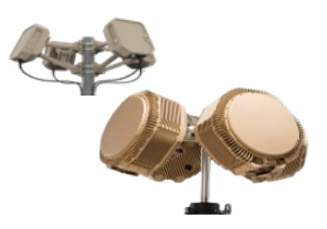
Radars
Compact AESA pulse-Doppler radars for 4D detection (range, azimuth, elevation, velocity) of low-RCS aerial/ground targets; support multi-target tracking, AI classification (drones, birds), false alarm reduction, and MIL-STD compliance for fixed/mobile deployments in varied environments.
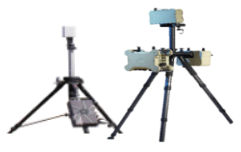
RF Sensors
Advanced RF-based systems for passive scanning of identifying drone signatures, parsing telemetry for location/altitude, and using Integrated Protocol Intelligence (IPI) for seamless takeover or takeoff denial without jamming, supporting up to 4 simultaneous tracks per sensor.
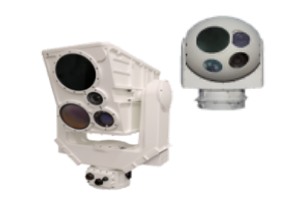
EO Sensors
Rugged electro-optical systems with HD thermal, daylight, and SWIR sensors for 24/7 long-range surveillance in harsh environments; embedded AI enables detection, recognition, identification, and tracking of targets through adverse conditions like fog or smoke.
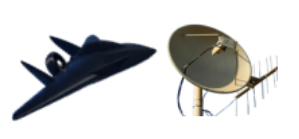
Effectors
Soft & hard kill centralized control across defense layers, integrating soft- and hard-kill, kinetic and non-kinetic interception within an operational picture. Soft-kill capabilities include RF jammers disrupting communications, GNSS, and frequency hopping via barrage and sweep waveforms in directional or omnidirectional modes.